Visiting the Angkor temples means setting foot in one of the most beautiful ancient sites in the world. From the mighty Angkor Wat to the mysterious carved faces of the Bayon and Ta Prohm, where the jungle is taking back its place, every temple tells a story and has a unique atmosphere that left a deep impression on us during our trip to Cambodia. But with more than 200 temples spread over 400 km² (150 sq mi), it’s easy to get lost and not know where to start.
So how should you plan your visit to the Angkor temples in 3 days? Which temples should you prioritize? How do you get around the site and catch a beautiful sunrise? We cover it all in this guide!
A brief history of Angkor
The Angkor temples are the remains of the Khmer Empire, which flourished between the 9th and 15th centuries. Founded by King Jayavarman II, this civilization built the temples in honor of the Hindu, and later Buddhist, gods. At its peak, the city of Angkor (meaning “city” in Khmer) had nearly one million inhabitants.
After Angkor’s golden age under Jayavarman VII, who built the Bayon and Ta Prohm among others, the empire declined. Wars with the Kingdom of Siam, economic difficulties and climate change weakened the city, which was gradually abandoned.
Rediscovered in the 19th century by French explorer Henri Mouhot, the city fascinated the world with its sheer scale. Since then, major restoration work has been carried out to preserve this unique heritage. Today, Angkor is a UNESCO World Heritage Site and attracts more than 2.5 million visitors a year.
Which Angkor pass should you buy?
Where to buy your Angkor pass
You have two options:
1. Buy online
The most convenient option, and the one we chose. You can go to the official website, angkorenterprise.gov.kh, or use their Angkor-Pass mobile app.
You can pay by credit card; you’ll just need to upload an ID photo before receiving your ticket (a selfie taken in our hotel bathroom worked perfectly for us!).
You’ll then receive a pass as a PDF, which you’ll need to show on your phone before entering each temple. We did it the morning of our visit, and it was quick and easy!
2. Buy at the ticket office
There’s only one official ticket office, the Angkor Park Pass Ticket Counters, fairly far from downtown Siem Reap. It’s open every day from 5 a.m. to 5:30 p.m., and you can pay in cash or by credit card.
Every visitor must be present at the ticket office when buying, since each person’s photo is taken on the spot and printed on the pass. You’ll get a paper pass that you need to keep safe and show before entering each temple.
Pro tip: passes bought (online or at the ticket office) between 5 and 5:30 p.m. only start the next day, but you can enter the site the same evening to watch the sunset over the temples for free.
Choose the length of your pass
There are 3 different passes for visiting the Angkor temples, depending on how long they’re valid:
- 1 day for $37
- 3 days for $62 (valid for 10 days)
- 7 days for $72 (valid for 30 days)
Good to know: Entry is free for children under 12, and for the 3-day and 7-day passes, the validity period starts on the day of purchase. These passes give you access to the whole Angkor site, as well as outlying temples such as Roluos, Banteay Srei, Phnom Krom and Beng Mealea.
We recommend getting at least the 3-day pass if you have time. The site is huge, and in one day you’ll only see the most popular temples, missing some beautiful, lesser-known temples further out. With 3 days, you’ll have time to see the most beautiful temples on the site and visit some of the more distant ones.


Angkor temples opening hours
The temples are open from 7:30 a.m. to 5:30 p.m. Some temples have longer hours so you can watch the sunrise or sunset.
These temples open at 5 a.m. for sunrise: Angkor Wat, Phnom Bakheng and Pre Rup.
These temples close at 7 p.m. for sunset: Phnom Bakheng and Pre Rup.
Where to stay to visit the Angkor temples
You can’t stay on the Angkor site itself. The nearest town is Siem Reap, whose downtown is a 15-minute drive from Angkor Wat.
Siem Reap is a lively town with tons of things to do and see. We really enjoyed taking the time to explore the town and the surrounding area, especially Kulen Mountain and the floating villages of Tonle Sap Lake.
For your hotel, we recommend The Urban, where we spent 4 nights. Attentive service, a beautiful setting and a lovely pool: we loved it!
🛕 Book your stay near the Angkor temples ➜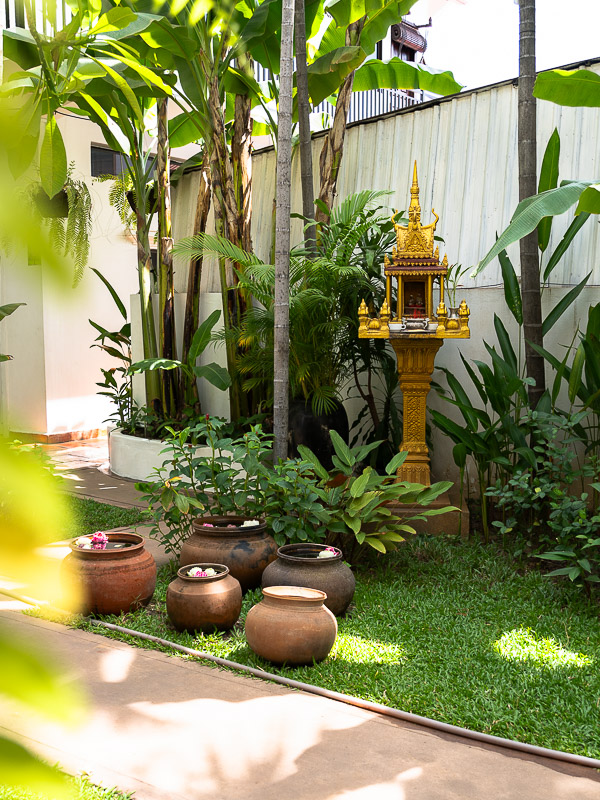


How to plan your visit to the Angkor temples
Visits to the temples generally follow two circuits, designed by the Angkor Conservation Office:
- The Small Circuit: a 15 km (9-mile) loop that covers the most popular temples, including Angkor Wat, Ta Prohm and the Bayon.
- The Grand Circuit: a 24 km (15-mile) loop that takes you to temples that are further out but just as beautiful, like Preah Khan and Pre Rup.
We detail the route of each circuit further down.
If you’re visiting Angkor in 1 day, you’ll probably want to focus on the main temples of the Small Circuit.
If you’re visiting Angkor in 3 days, you can plan your stay like this:
- Day 1: the Small Circuit
- Day 2: the Grand Circuit
- Day 3: the outlying temples, like the Roluos Group and Banteay Srei
That’s what we had planned at first. But the Small Circuit is big, with 17 stops in total, and between the heat and the fatigue (we had landed in Cambodia the day before), we chose to split the Small Circuit over 2 days so we could enjoy it in better conditions. It also let us fit in a sunrise over Angkor Wat on our third day.
How to get around the Angkor temples
Covering more than 400 square kilometers (150 sq mi), the Angkor temples are impossible to visit on foot. You’ll definitely need transportation, and there are several options.
1. Rent a bicycle
Plenty of travelers explore the Angkor temples by bike, at least for a day to do the Small Circuit. Hats off to them, because it can get very hot during the day, and we wouldn’t have felt up to it!
If you’re tempted, you’ll find lots of rental shops, with prices between $1 and $2 a day. You can also go for an electric bike (e-bike), a little more expensive but much easier on the legs.
2. Rent a scooter
That’s what we did, and it’s super convenient for visiting the temples easily and at your own pace. You’ll find lots of scooter rental shops in Siem Reap; check the Google reviews first. We went with 20T4 Scooters Rental, where we rented a scooter in good condition for $10 a day.
Driving is fairly easy in Cambodia, especially around the temples where there isn’t much traffic, and gas is cheap (about $2 for a full tank).
3. Hire a tuk-tuk
The most popular option, and ideal for groups of 3 or 4. You’ll find available drivers all over Siem Reap, with prices ranging from $15 to $25 depending on the circuit.
Make sure you agree on the route with your driver at the start of the day, since changes along the way can mean a change in price.


Should you visit with a guide?
Many licensed guides are available to show you around the temples. You can find guides’ contact details on travel forums or in Facebook groups for travelers to Cambodia, where users share their recommendations. Otherwise, ask your hotel: they’ll probably have contacts to recommend.
Expect to pay around $50 a day for a guide, plus the cost of a tuk-tuk driver.
We went without a guide, but we somewhat regret it, as it would have been even better with someone to tell us the history and point out the details of each place. We mainly relied on our guidebook, which already gives plenty of information about the different temples.
And if you don’t have a guide, you can use the Angkor-Pass app, which provides information about the temples through an interactive map.
Finally, another option is to book a small-group tour, with a guide and driver, for one or several days. You’ll find several of them on GetYourGuide, starting at about $17 a day.
What to wear to the Angkor temples
Men and women must have their shoulders and knees covered, or they may be refused entry to the temples (although the rules seem a little more flexible for men). Nothing beats a pair of linen pants to stay cool!
Best time to visit the Angkor temples
The best time to visit the Angkor temples is from November to March. It’s the dry season, with temperatures between 77 and 86°F (25 to 30°C) and low humidity, which makes visiting more comfortable.
April and May are the hot season. Temperatures can climb to 104°F (40°C), which can make visits exhausting. June to October is the rainy season. There are fewer tourists and the vegetation is lush, but it comes with the risk of sometimes heavy downpours and muddy paths.
Our tips for visiting the temples and avoiding the crowds
Before we get into the details of the circuits and temples, here are a few tips to help you plan your visit to Angkor:
- Get up early: If you want to enjoy the temples without too many people, try to get there when the site opens at 7:30 a.m.
- Go during off-peak hours: Likewise, for a quieter visit, see the most popular temples between noon and 2 p.m. (which are also the hottest hours) or in the late afternoon after 4 p.m.
- Do the circuits in reverse: One last trick to avoid the crowds is to do the Small and Grand Circuits in the opposite direction, so you don’t end up following big tour groups.
- Bring food and drinks: You’ll find some on site, but prices are higher than in Siem Reap. And bring plenty of water!
- Watch out for the sun: In the middle of the day, it can get really hot on the site, and there isn’t always much shade. Sunscreen, a cap and a water bottle are your best friends.
- No drones: Flying a drone is prohibited at Angkor, and plenty of signs are there to remind you.
How to watch the sunrise at Angkor Wat
At Angkor, you’ll witness one of the most iconic sunrises in the world: the sun rising behind Angkor Wat, gradually revealing the temple’s majestic silhouette as it reflects in the pools in front of it.
To see it, you’ll have to get up early! Angkor Wat opens at 5 a.m., but the first visitors arrive as early as 4:30 a.m. to get a front-row spot. The goal is to be in the front row by one of the two pools to get the best photos.
Buy your pass the day before so you don’t waste time in the morning. Also, the left pool is said to be less crowded than the right one, with a better view. And if you’re worried about the crowds, you can head to the other temples that open for sunrise instead: the red-brick temple of Pre Rup, the hilltop pyramid of Phnom Bakheng or the Srah Srang reservoir.
Our experience:
We went to see the sunrise in February. When we arrived at 5:30 a.m., there were already people, but it was reasonable, and we found a spot in the second row behind the right pool (the left pool was surrounded by barriers, so it wasn’t an option). Lots of people arrived after us.
To take photos, we were also able to politely ask the people in front of us to let us take their place for a shot or two, and people were generally very kind.
However, it was quite cloudy, and the sunrise wasn’t as beautiful as the photos you see online. Keep in mind that the sky is often overcast.
What about sunset?
The most popular spot is Phnom Bakheng, which offers a view over Angkor. But it’s very busy, and access is limited to 300 people. Arrive at least 1.5 hours early if you want to be sure to get in. Otherwise, you can go to Pre Rup or Srah Srang for sunset.


Angkor temples in 3 days: the Small Circuit
This circuit takes you to Angkor’s must-see temples, the best of the best. With 17 stops over 15 km (9 miles), it’s intense! You’d need a full day to see everything. We did it over two days so we wouldn’t get “templed out” too quickly, and spent the rest of our time exploring Siem Reap.
Here are the different stops, listed in the classic order.
Angkor Wat
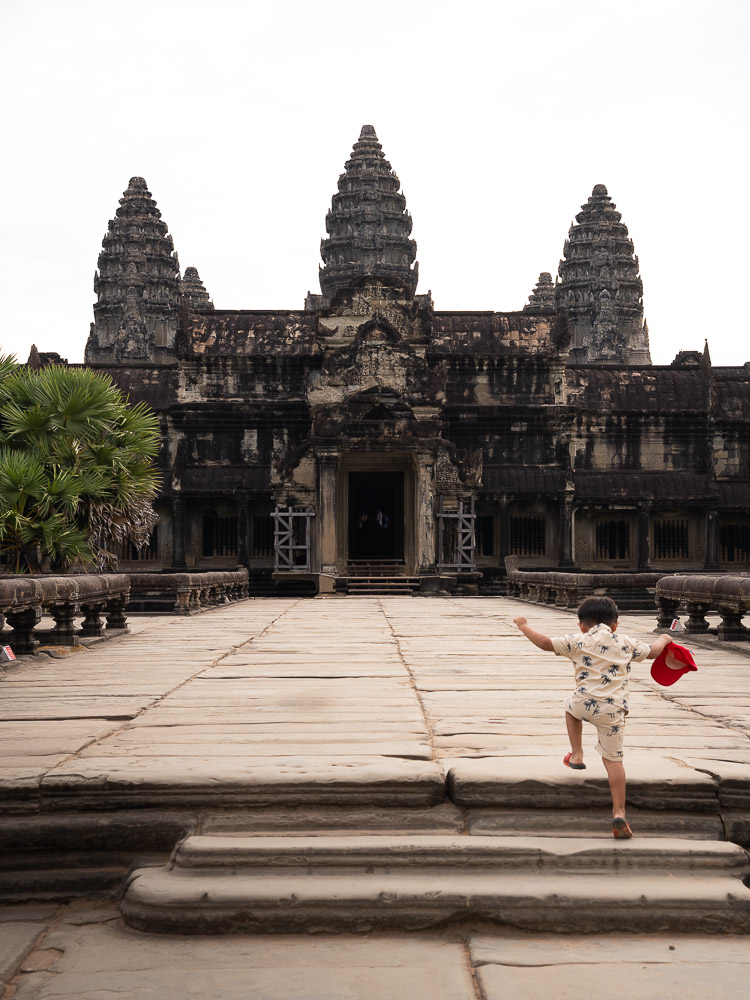
The largest religious monument in the world and a symbol of the country (it even appears on the Cambodian flag), Angkor Wat is the real star of the site. The temple is huge and its silhouette is truly stunning. Plan at least 2 hours to visit.
You can climb to the top of the central tower for a beautiful panorama over the surrounding jungle (avoid peak hours, when the line can take over an hour). Above all, don’t miss the bas-reliefs on the walls of the outer gallery, which are beautifully preserved. We especially loved the Churning of the Ocean of Milk on the east gallery!




Phnom Bakheng
This pretty pyramid sits on top of a hill, so you’ll need to walk a bit to reach it. But Phnom Bakheng is especially popular for its stunning view of Angkor Wat rising above the jungle, and of Tonle Sap Lake in the distance. It’s a very popular sunset spot, open until 7 p.m.


Baksei Chamkrong
Just steps from Phnom Bakheng, this small pyramid is overlooked by most visitors. We were the only ones there, even though it’s really lovely! It almost feels like you’re in Inca country.


Angkor Thom South Gate
Angkor Thom is a fortified city that’s home to several major temples. You enter through massive gates, including the South Gate. To reach this impressive archway topped with a four-faced Buddha, you cross a bridge lined with 54 statues of Hindu gods and demons, reenacting the Churning of the Ocean of Milk. Don’t miss the Victory Gate either, on the east side of Angkor Thom.


The Bayon
One of the most beautiful temples on the site, impressive from the outside with all its towers covered in faces (216 in total!). It’s easy to get lost inside this maze of corridors, where you constantly feel like you’re being watched.
Don’t miss the huge bas-reliefs on the outer walls either, depicting historical scenes and everyday life.


The Baphuon
This large pyramid facing the Bayon is one of the largest religious monuments of ancient Cambodia. You reach it via an impressive stone causeway, frequented by lots of little monkeys.


Terrace of the Elephants and Terrace of the Leper King
These terraces are covered in beautiful bas-reliefs, with elephants galore on one and countless Hindu deities on the other.


Thommanon
This lovely little temple is dedicated to Vishnu. Dating from the early 12th century, it’s still very well preserved. We had it all to ourselves, which felt great!
Ta Keo
This massive pyramid, more than 50 m (164 ft) high, is really impressive from a distance. It offers a nice view from the top, but be warned: the steps are steep (and there are a lot of them)! One of our favorite temples.


Ta Prohm
Another Angkor star, this temple was made famous by Angelina Jolie, who came here to film Tomb Raider (you’ll see lots of people taking photos in front of the tree that appears in the movie).
What makes this temple so unique is how nature has taken over. The stones are covered in moss, trees grow in the middle of the ruins and their roots straddle entire walls.
Sharp-eyed visitors can also spot a carved dinosaur in a bas-relief near the temple exit, whose origin is still debated!


Banteay Kdei
More than 100 meters (330 ft) long, Banteay Kdei is a superb example of a “flat temple,” as opposed to “temple mountains” like Ta Keo. The entrance gate is magnificent, with its four-faced tower.


Srah Srang
This reservoir, built by Jayavarman VII, measures 800 by 400 meters (about half a mile by a quarter mile) and is lined with terraces and steps. There are also several restaurants nearby, making it a good spot for lunch and a break!


Prasat Kravan
Built in 921, it’s one of the oldest temples on the site! Made entirely of red brick, it’s quite different from the other monuments, with its 5 pretty towers. Very few visitors too, so it’s quite pleasant.


Angkor temples in 3 days: the Grand Circuit
The Grand Circuit makes a wider loop around Angkor Wat. Although the distances between stops are longer, this circuit is quicker than the Small Circuit because there are fewer stops (5 in total). There are also fewer people at the temples overall, which is always nice!
Preah Khan
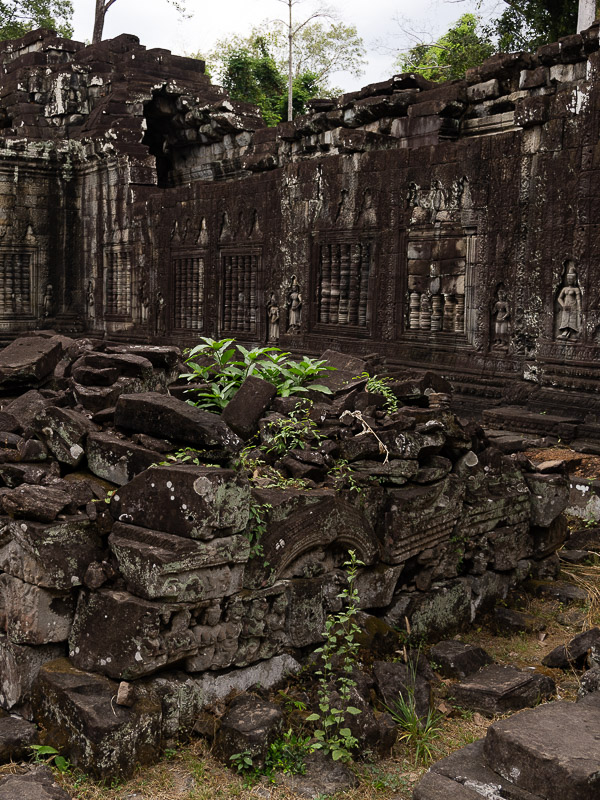
One of the largest temples on the site, with a long succession of rooms that took us a good 15 minutes to walk through. At its peak, nearly 50,000 people worked to maintain this temple, including 4,500 cooks and 1,000 dancers. Inside, you’ll find lovely carvings and a small stupa at its center.



Neak Pean
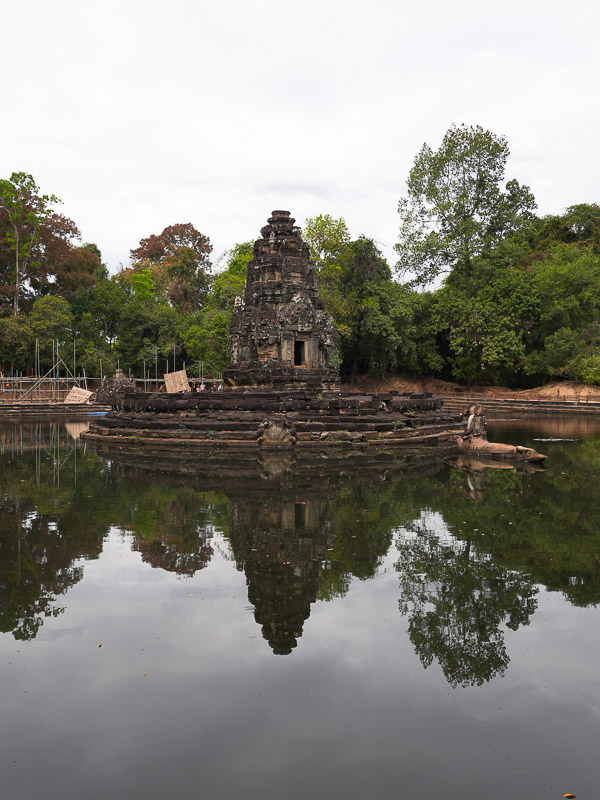
Neak Pean is a large pool with a shrine in the middle. But the best part is the path leading to it, where you cross a lovely boardwalk through water lilies and lotus flowers.




Ta Som
This pretty temple is quite similar to Ta Prohm, with far fewer people. Trees grow everywhere, even blocking one of the temple’s entrances! We loved it.


East Mebon
This pyramid, dating from 952, stands out for its elephant statues at each corner. Above the doorways of each tower, you’ll also find beautifully preserved bas-reliefs of Hindu deities.


Pre Rup
One of our favorite temples! This all-brick pyramid with its many towers was originally a funerary temple. With a lovely view from the top and very few people when we visited around 8:30 a.m., we loved it!


The outlying temples
Finally, your Angkor Archaeological Park pass also gives you access to several temples outside the main site around Angkor Wat. Here are a few of them.
Phnom Krom
A 20-minute drive south of Siem Reap, this hilltop temple is said to be worth it mainly for its view over the rice paddies and Tonle Sap Lake, especially at sunset.
Banteay Srei
A 50-minute drive from Siem Reap, Banteay Srei is an impressive temple entirely covered in carvings that are still very well preserved.
The Roluos Group
30 minutes east of town, this site is home to a group of temples from the late 9th century. You can visit the funerary temple of Preah Ko, Bakong, a temple dedicated to Shiva, and Lolei with its 4 brick towers.
Beng Mealea
A 1.5-hour drive away, this temple is similar to Ta Prohm, but even wilder. Much of the temple lies in ruins, and you explore it along wooden walkways and by squeezing between the stones.
Our 3-day Angkor itinerary
Here’s how we split our time over 3 days (the temples with a little ❤️ are our favorites).
Since we also wanted to see the sights of Siem Reap and the surrounding area, we split our days in two: temples in the morning, Siem Reap in the afternoon. This also kept us from getting “templed out” too quickly. As mentioned above, we visited the temples in the reverse direction of the circuits to avoid the crowds.
Day 1:
- Prasat Kravan
- Srah Srang ❤️
- Banteay Kdei
- Ta Prohm ❤️
- Ta Keo ❤️
- Thommanon
- Terraces of the Elephants and the Leper King
- The Bayon ❤️
- South Gate ❤️
- + Lotus Silk Farm
Day 2:
- Pre Rup ❤️
- East Mebon ❤️
- Ta Som ❤️
- Neak Pean
- Preah Khan
- Baphuon
- + Angkor Botanical Garden, APOPO Visitor Center, Angkor National Museum
Day 3:
- Sunrise and visit of Angkor Wat ❤️
- Phnom Bakheng ❤️
- Baksei Chamkrong
- + Trip to the floating village of Kampong Phluk
Find all the details of our trips around the area in our guide to Siem Reap!
Is Angkor worth it? Our verdict
We absolutely LOVED our visit to the Angkor temples, and it was a highlight of our trip to Cambodia. We loved it so much that we felt we could have spent more than 3 days there. Looking back, we still can’t quite believe we got to see these wonders. In our opinion, it’s a visit that will delight young and old alike, whether or not you’re a history buff.
Some of the links in this article are affiliate links, which means we earn a small commission if you make a reservation through them. This doesn’t change the price for you, but it helps us continue to create content for our blog, which will always remain free. Thank you for your support 🫶