The capital of Cambodia, Phnom Penh is a city shaped by history. It went through prosperous times, especially during the French colonial era, but also dark years under the Khmer Rouge regime. Today, Phnom Penh is a city caught between modernity and tradition. On the menu: Buddhist temples, local markets, Khmer boxing and strolls along the legendary Mekong. Often skipped by travelers, Phnom Penh is, in our opinion, a city well worth visiting!
It was the last stop on our Cambodia itinerary, and in this guide we share the best things to do in Phnom Penh in 2 days!
Things to do in Phnom Penh
1. Tuol Sleng – S21 (Genocide Museum)
Stepping into Tuol Sleng means bearing witness to a tragic chapter of Cambodian history. Once a high school, it was turned into a torture center (known as S-21) by the Khmer Rouge in 1975. Around 18,000 people were held prisoner and tortured at S21, then executed within these walls or in the Killing Fields. It’s staggering, even more so when you learn there were 196 places like this across Cambodia…
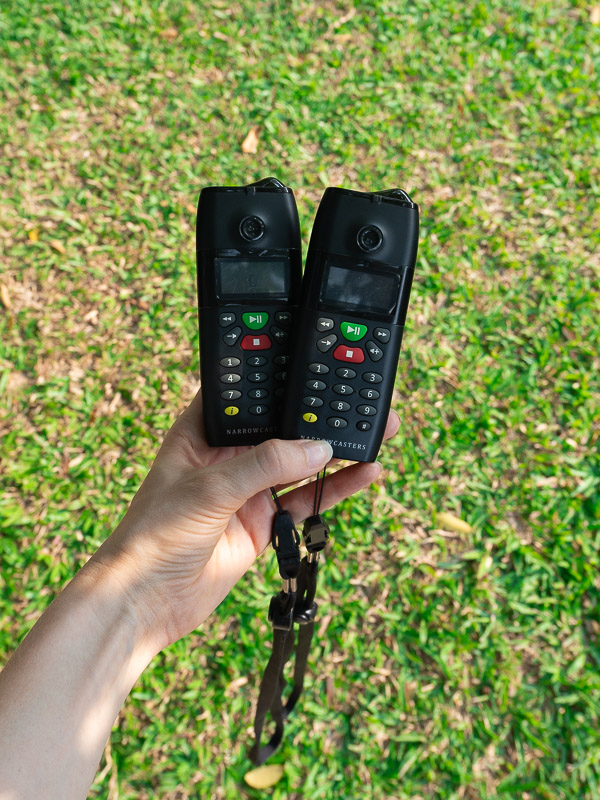
Today, Tuol Sleng – S21 is a museum and memorial that preserves the memory of these painful events. We strongly recommend getting the audio guide ($5), which takes you through each building and explains the whys and hows of Pol Pot’s dictatorship and the history of the site. This excellent audio guide is essential to really understand the place, as there are almost no information panels.
In our opinion, it’s a truly essential visit in Phnom Penh, and even in Cambodia, to understand the country today. However, some rooms are deeply harrowing (photos and torture instruments, among other things). So ask yourself whether you (or your children) can handle this visit emotionally.
Practical information:
💶 Price: $5, plus $5 for the audio guide (a must)
🕘 Opening hours: Every day, 8 a.m. to 5 p.m.
⏳ Visit duration: 2 to 3 hours


2. The Killing Fields (Choeung Ek)
To complete your visit to Tuol Sleng, you can go to Choeung Ek, known as the “Killing Fields.” Choeung Ek is the best known of the more than 300 killing fields in Cambodia. Around 20,000 people are believed to have been executed there, many of them prisoners from S21.
The site is about 15 km (9 miles) from Phnom Penh, and unfortunately we didn’t have time to go. To make the trip easier, you can book this tour that combines guided visits of Tuol Sleng and Choeung Ek.
3. The Royal Palace
The symbol of the capital, the Royal Palace is a complex with several palaces and pavilions, and it’s also the King’s residence. Of course, his private quarters aren’t open to the public. By the way, to know whether the King is home, look for a blue flag flying high. If you see one, the King is in!
Although the palace looks old, it’s actually fairly modern. It was built in the 20th century in traditional Khmer style.
👉 Here are the places not to miss during your visit to the Royal Palace:
- The Throne Hall: you can’t go inside, but the building is very impressive. It houses the King’s ceremonial throne, used for official ceremonies. You can see it from the outside.
- The Silver Pagoda: this is probably the most famous building in the complex. Also known as Wat Preah Keo, its floor is covered with 5,329 silver tiles, and inside you’ll find beautiful treasures, including the Emerald Buddha (made of jade) and a gold Buddha encrusted with 2,086 diamonds.
- The murals: the walls surrounding the Silver Pagoda are covered with large, colorful murals depicting a Cambodian epic poem, the Reamker.
- Napoleon III Pavilion: a lovely pavilion that stands out from its neighbors with its wrought iron. A touch of Paris in Cambodia! It was originally given to Empress Eugénie for the opening of the Suez Canal, then offered by Napoleon III to King Norodom in 1876. Unfortunately, we couldn’t go inside.
- The Angkor Wat model: within the Silver Pagoda enclosure, you’ll find a large scale model of the famous Angkor Wat temple.
We really enjoyed this visit: the buildings are especially beautiful and the gardens are lovely to stroll through. We did find the price a bit high, though, and many areas are closed to the public. If you still have some energy left, the National Museum of Cambodia is right next door. This large red building houses collections from the Angkor period. We skipped it, since we had already visited the Angkor National Museum in Siem Reap.
Practical information:
💶 Price: $10.50 (clothing covering shoulders and knees required)
🕘 Opening hours: Every day, 8 to 11 a.m. and 2 to 5 p.m. (the palace may close to the public without notice for official ceremonies)
⏳ Visit duration: About 2 hours


4. The markets: Central Market, Old Market, Russian Market and Night Market
The Cambodian capital has many markets all over the city, all very popular with locals. They’re where Cambodians go to buy their fruit and vegetables, meat, fish and even clothes.
We love visiting markets to soak up the atmosphere and local culture. In Phnom Penh, we visited 3 of them: Central Market, Old Market and Russian Market.
Central Market
Let’s start with our favorite: Central Market (Psar Thmei in Khmer). If there’s one market to visit in Phnom Penh, it’s this one. The building was designed in the 1930s by international architects, including two Frenchmen, Jean Desbois and Louis Chauchon.
The market is made up of a large central dome, 50 meters (164 ft) high, and 4 wings. Under the dome, you’ll mainly find jewelry stalls, and clothing in the wings. In the outer galleries, there are lots of vendors selling fruit and vegetables, meat and even flowers. There’s even a food court where you can sit down for lunch.
We loved the Art Deco architecture of this market and the friendly energy of the vendors, who seem more used to tourists than at other markets. Note that Central Market closes early.


Old Market
This market is not far from Central Market, closer to the Mekong. It’s also called Phsar Chas in Khmer. It used to be a wooden building but burned down in 2014, so there’s not much left that’s actually old… We walked through it quickly and mostly wandered around the outside to look at the colorful fruit and vegetable stalls.
Right next door is the very pleasant Night Market: we tell you more about it in our Where to eat section!


Russian Market
The Russian Market (or Phsar Toul Tom Poung) is fairly similar to the Old Market. It’s called the Russian Market because it was popular with Russian expats in the 1980s, when Phnom Penh was under Vietnamese and Soviet influence.
In our opinion, it’s not a must, especially since it’s a bit out of the way. Focus on the first two instead!


5. Phnom Penh’s temples: Wat Phnom, Wat Ounalom and Wat Botum
Wat Phnom
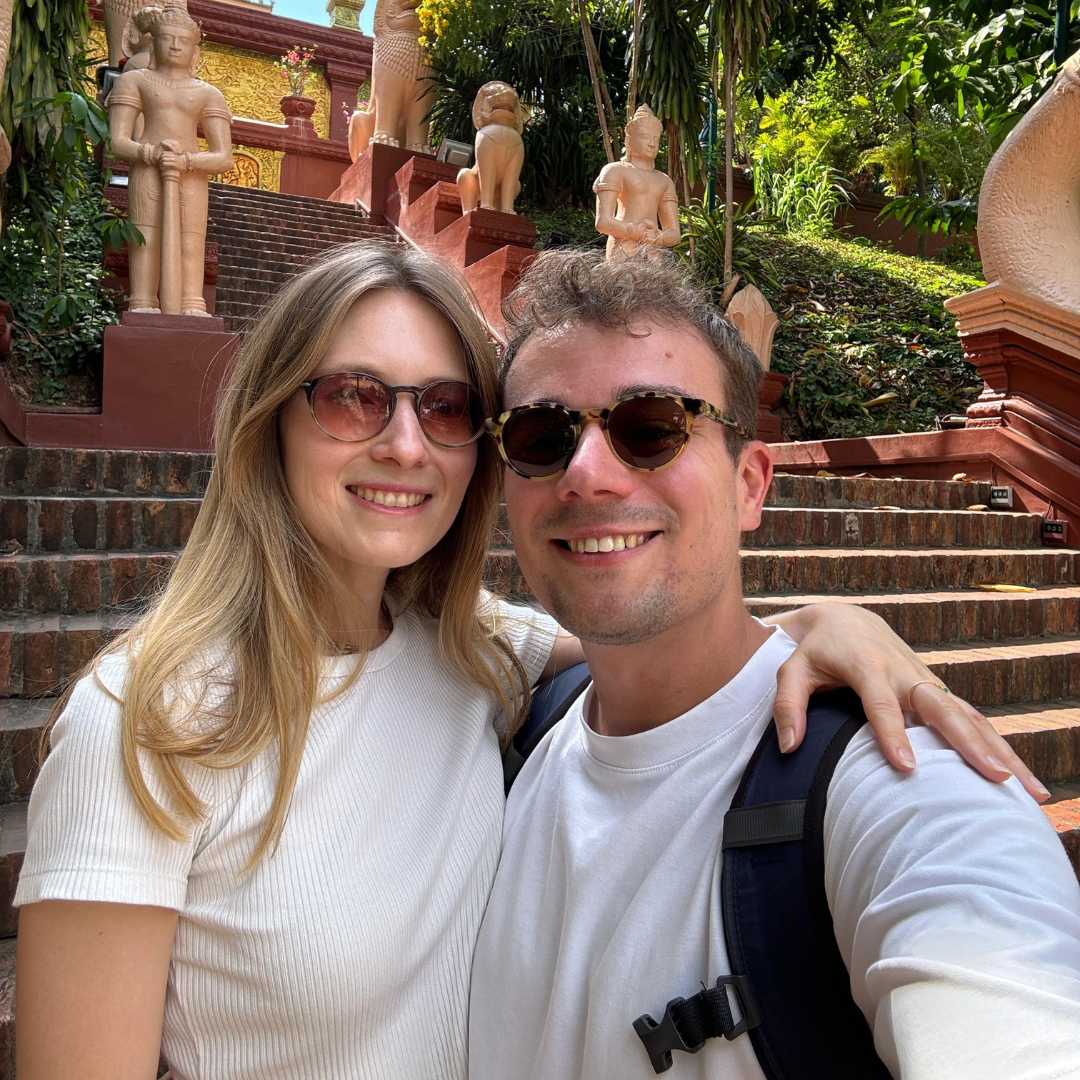
It’s probably the best-known pagoda in Phnom Penh (maybe even in Cambodia?). According to legend, this pagoda is the very origin of the city: Penh, also known as Lady Penh, was a wealthy Cambodian widow in the 14th century. After finding sacred statues inside a floating tree trunk, she had a hill and a temple built to house them, known today as Wat Phnom. The city of Phnom Penh takes its name from this hill (“phnom” in Khmer) and from Lady Penh.
The pagoda sits on top of a 30-meter (100 ft) hill, surrounded by a wooded park home to squirrels and great hornbills. We were lucky enough to spot some, and we were very glad to have our binoculars with us to watch these beautiful birds, iconic of Southeast Asia! Entry: $1.


Wat Ounalom
This is one of the oldest and most important Buddhist temples in Cambodia. The monastery was once huge, with more than 40 buildings. Unfortunately, the Khmer Rouge destroyed most of them… The main temple is still impressive, though! Free.


Wat Botum
The last pagoda we visited during our two days in Phnom Penh, Wat Botum is known for housing part of the Buddha’s ashes… The complex is very pretty, especially the inside of one of the temples, covered in large murals, worthy of a cathedral! We don’t have many photos because a Buddhist conference was taking place. Free.


6. Independence Monument
We’ll come back to the French colonial era further down: the Independence Monument symbolizes its end. It was inaugurated in 1962, nine years after Cambodia gained independence in 1953. Its design is inspired by traditional Khmer temples, with its stupa shape and tiered roofs. About 20 meters (65 ft) tall and built of concrete, it’s very imposing when you stand at its base. To reach it, you’ll have to cross the stream of scooters and tuk-tuks, since it stands in the middle of a roundabout. Nearby, you’ll also find the memorial to King Norodom Sihanouk.


7. Stroll along Sisowath Quay and take a Mekong cruise
Sisowath Quay is the riverside promenade where the Tonle Sap meets the Mekong. It’s a favorite spot for Cambodians and full of life: children play, couples stroll and monks come to rest. After dark, it gets even livelier, with street food stalls drawing in the locals. It’s a lovely walk, especially at the end of the day, since the quay and the street next to it are pedestrian-only in the evening.
You can also book a Mekong cruise to discover this legendary river at sunset.


8. The old French administrative quarter (post office and train station)
As in Kampot, traces of the French colonial past remain in Phnom Penh. Cambodia was a French protectorate from 1863 to 1953, and today’s Phnom Penh still has a few buildings built by the colonists. We mainly focused on the old French administrative quarter, home to the old French post office, Phnom Penh train station and the Hotel Manolis.
The old French post office was the first building built by the French colonists. You can’t miss it, with its pretty yellow color and typical colonial style. It’s still in use, so feel free to step inside to see the old colorful PO boxes (has Wes Anderson been here?). Right across the street is the Hotel Manolis, where André Malraux was held after being accused of stealing bas-reliefs from Angkor.
Phnom Penh train station was designed by Jean Desbois in Art Deco style, just like Central Market. You can admire old carriages and locomotives, and even catch a train to Sihanoukville or Poipet (the lines also stop at places like Battambang). Not a must, but nice!


9. Watch a Kun Khmer fight
The national sport for more than 1,200 years, Khmer boxing is much less known than its neighbor, Muay Thai. Yet Kun Khmer is said to have appeared before Muay Thai! The two martial arts have a lot in common: both use the “8 limbs” of the body (fists, elbows, knees and legs, meaning feet and shins); traditional music is played during the fights; and the fighters perform a ritual before each bout.
To watch a Kun Khmer fight, head to the Bayon TV studio. At the entrance, you’ll be offered a $1 VIP ticket to sit in the chairs at the foot of the ring, but you can turn it down and take the free option! In fact, we recommend skipping the VIP ticket. That’s what we did, and we got to sit in the stands among the passionate fans.
We loved this experience, between the impressive fights, the energy of the crowd and the traditional music that accompanies each bout. We highly recommend it if you’re looking for an authentic, off-the-beaten-path activity.
Fights usually take place on Fridays, Saturdays and Sundays between 6 and 8 p.m. To check whether there’s a fight during your stay, ask a tuk-tuk driver: they’re usually well informed about these events. Otherwise, you can book an organized trip with GetYourGuide.

10. Bassac Lane
If you want to grab a drink or let loose on the dance floor, head to Bassac Lane. It’s a street lined with bars, each with its own vibe.
Next to this street is Wild, a restaurant where we had lunch in a beautiful leafy courtyard (more on it in the “Where to eat” section).
Our 2-day Phnom Penh itinerary
- Day 1: Tuol Sleng, Russian Market, Wat Phnom, Post Office and colonial buildings, Old Market & Night Market, evening on the Mekong riverside
- Day 2: Royal Palace, Wat Ounalom, Wat Botum, Independence Monument, Bassac Lane, Khmer boxing
Find all the places we visited and the restaurants we tried and loved on the map below:
Where to stay in Phnom Penh?
For our stay in Phnom Penh, we chose to stay near the Royal Palace, and even witha view of the Royal Palace! We picked the Glow Park, a hotel with a rooftop pool overlooking the Royal Palace and the Mekong. With the high temperatures, we really enjoyed cooling off by the pool. The Glow Park is well located, quiet and offers great value for money: we recommend it.
🛌 Book your stay in Phnom Penh ➜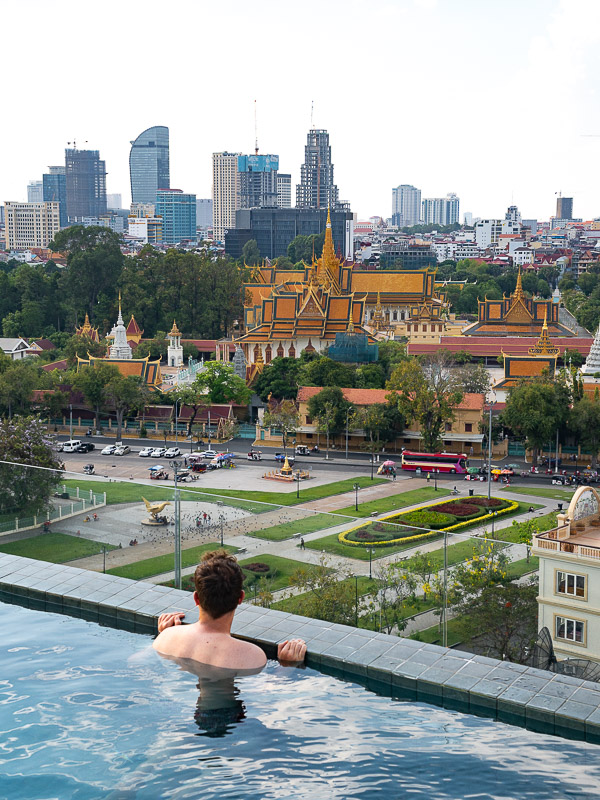

How to get around Phnom Penh?
Phnom Penh is a very spread-out city. Even if it doesn’t look like it on Google Maps, getting from one sight to the next takes time. We mostly got around on foot when we could and by tuk-tuk when distances were too long. As everywhere in Cambodia, we recommend the Grab app to book a driver (otherwise you’ll find them on every street corner, but prices are much higher).
How many days in Phnom Penh?
2 days feels right to visit Phnom Penh, or 3 days if you want to add a trip to the silk island, Koh Dach, where you can learn more about silk weaving. We personally spent 2 days and 3 nights in Phnom Penh.
Where to eat in Phnom Penh?
While we ate really well throughout our trip across Cambodia, we can’t say the same about Phnom Penh’s restaurants. They were expensive and the portions a bit disappointing.
Still, there were 3 places we enjoyed:
- The Night Market: the best value for money in Phnom Penh. There are several stalls to choose from (though they all serve more or less the same thing), and then you sit in the middle on large mats. Generous dishes to enjoy alongside tourists and locals!
- Wild: Wild’s specialty is spring rolls, fresh and creatively reinvented. This modern restaurant is near Bassac Lane, in a shady courtyard where dozens of butterflies flutter around.
- Koki Kitchen: this small restaurant and ice cream shop near the Royal Palace serves incredibly tasty homemade ice cream. Special mention for the ube ice cream, made from a purple yam that tastes like salted caramel: delicious.


Is Phnom Penh worth visiting? Our verdict
Phnom Penh was a great way to end our trip to Cambodia. It’s a very busy city, much more modern than the rest of the country, but tradition and authenticity are still very much alive. It wasn’t love at first sight, but we really enjoyed our two days there!
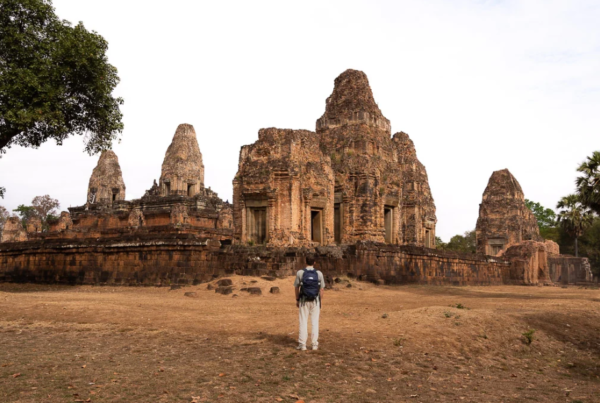
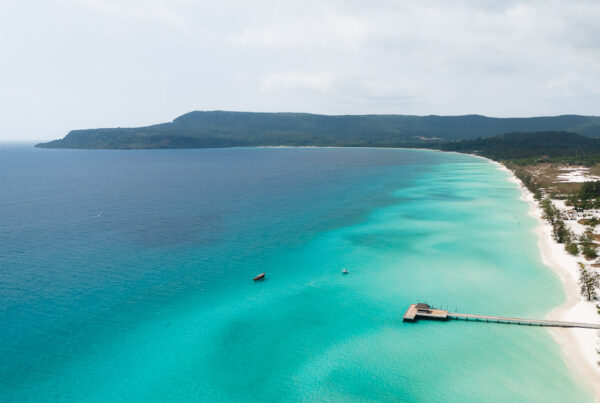
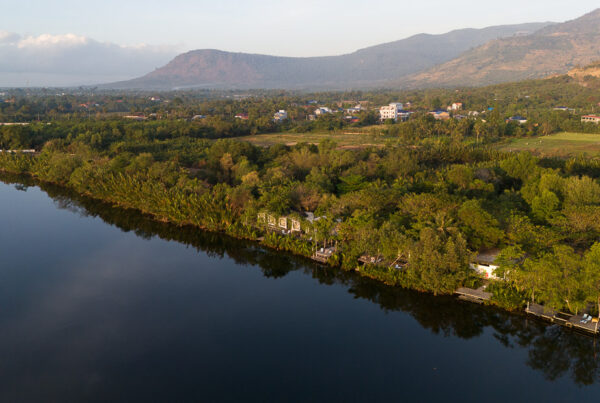
To discover more of Cambodia, check out our other guides to Siem Reap, Kampot and Koh Rong!
Some of the links in this article are affiliate links, which means we earn a small commission if you make a reservation through them. This doesn’t change the price for you, but it helps us continue to create content for our blog, which will always remain free. Thank you for your support 🫶