After visiting Sri Lanka, we were itching to go back to Asia. We quickly settled on Cambodia, and we can tell you that spending 2 weeks in Cambodia turned out to be one of our best trips ever, the kind that leaves memories you never forget.
Between the majestic temples of Angkor, the floating villages of Tonlé Sap, the peaceful beaches of Koh Rong and the warm smiles of the Cambodian people, this country offers a unique mix of culture, nature (and food!). It will delight travelers of all ages, history buffs and landscape lovers alike.
So what’s the best Cambodia itinerary? Where should you go, and for how long, to make the most of 2 weeks in Cambodia? In this guide, we share our day-by-day route, our budget and all our tips to visit Cambodia!
📍 Our itinerary at a glance:
14 days for about $1,000 per person, excluding flights
4 stops: Siem Reap > Koh Rong > Kampot > Phnom Penh
Trip taken in February 2025, article updated in April 2026 (prices, timetables, etc.)
Our Cambodia itinerary: 2 weeks, 4 stops
Our 2-week itinerary covers the main regions of Cambodia. Because travel times between each stop are quite long, we chose to limit the number of stops so we could really enjoy each one. Below you’ll find a detailed map of our itinerary, followed by a day-by-day breakdown.
- Days 1–4: Siem Reap and the temples of Angkor
- Days 5–8: Koh Rong island
- Days 9–12: Kampot and the surrounding area
- Days 13–14: Phnom Penh, the capital
Siem Reap (4 days): the temples of Angkor and much more
🚌 Getting there: From Phnom Penh, 6.5 hours by bus, or fly directly into Siem Reap Angkor International Airport.
⏰ Recommended stay: At least 3 days, ideally 4 or 5.
📝 Dedicated article: What to do in Siem Reap: 15 best things to do (besides Angkor)
Where to stay in Siem Reap
We recommend The Urban, a little green oasis right in the city center, with super friendly staff and a lovely pool to cool off after a day of temple-hopping!


Visiting the temples of Angkor
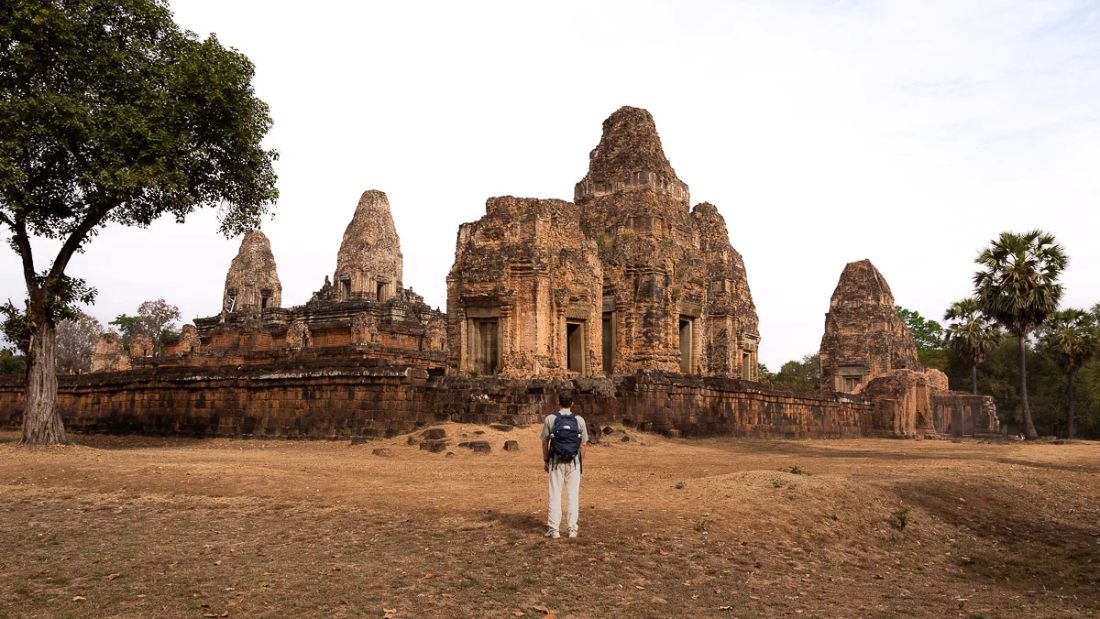
Of course, the main reason to come to Siem Reap is the temples of Angkor, Cambodia’s absolute must-see. Our number one tip: get up early and do the circuits in reverse to avoid the tour groups. The Small Circuit (15 km) takes you to the stunning Bayon and its 216 faces, the impressive pyramid of Ta Keo and the mysterious Ta Prohm, swallowed by the jungle. The Grand Circuit (24 km) is quicker but has some real gems, including Pre Rup and its majestic towers.
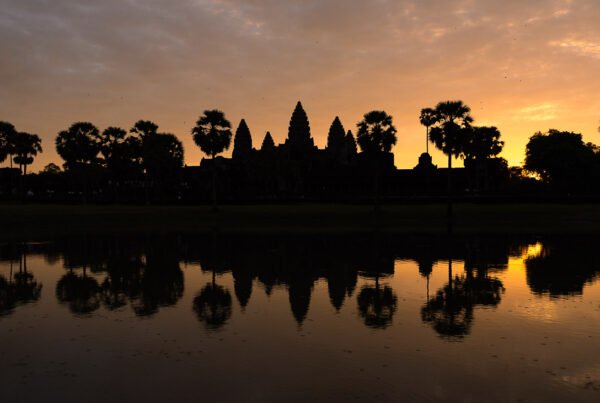
Sunrise at Angkor Wat is well worth the 4:40 a.m. alarm. Arrive before 5:30 a.m. to get a good spot facing the reflecting pool. Watching the temple’s silhouette emerge in the colors of dawn is a truly timeless moment, even with the occasional cloud. For a successful sunrise, check out our complete guide to the temples of Angkor.
Our second tip: buy the 3-day pass. It lets you see the highlights of the site without wearing yourself out, and to split your days so you’re not doing nothing but temples. Siem Reap has plenty of other things to see!


Other things to do in Siem Reap
Our two favorites in Siem Reap: the Lotus Silk Farm, a fascinating guided tour showing how fabric is made from lotus stems, and the APOPO Center, the training center for landmine-detecting rats. It’s a moving visit about demining in Cambodia, and you can even cuddle these adorable rodents.
The surrounding area is also worth exploring, with the floating village of Kampong Phluk on Tonlé Sap, the largest lake in Southeast Asia. We also spent a day in Phnom Kulen National Park, with lovely views and a reclining Buddha. But given the price and the distance, we don’t consider it a must-see.
Our verdict: we spent 4 days in Siem Reap and could easily have stayed 5. Between the temples, the cultural visits and the day trips, the city is much more than just Angkor. You’ll find all our other tips and favorite places in this article:
👉 Our complete guide to Siem Reap


Koh Rong (4 days): Cambodia’s island paradise
🚌 Getting there: From Siem Reap, 10 hours by bus to Sihanoukville, then a 45-minute ferry
⏰ Recommended stay: At least 3 days
📝 Dedicated article: What to do in Koh Rong, Cambodia: 10 best things to do + tips
Where to stay on Koh Rong
We recommend our hotel, Naroth Beach Bungalow, in the north of the island, in a charming area far from the crowds. We could see the sea straight from our bed and fell asleep to the sound of the waves!


Is Koh Rong worth the hype?
Koh Rong is the chill-out stop of our Cambodia itinerary, all coconut palms and beaches. Rent a scooter as soon as you arrive: it’s essential for exploring the island at your own pace.
Our favorite beach on the island is Lonely Beach. This wild beach, full of coconut palms and starfish, takes some effort to reach since it’s only accessible by a dirt track, but it’s well worth it. Long Beach (7 km of sand so fine it squeaks underfoot like snow) and Pagoda Beach (walk north to find the public stretches) are also worth a visit.
We also loved the fishing village of Prek Svay, in the north of the island. Colorful and built on both banks of a stream, it’s full of charm. If you’re lucky, you’ll meet the resident otter at the excellent Natural Kitchen restaurant, who sometimes sneaks into the kitchen to steal fish.
If you have time, a day on Koh Rong Samloem is worth it. This smaller neighboring island has no motor vehicles. Stick to Saracen Bay rather than trying to reach Sunset Beach: the walk there (45 minutes uphill in the sun, absolutely awful) eats up too much of a day already limited by ferry times.
Finally, for snorkeling, we didn’t think a boat trip was necessary. The rocks in front of Lily’s Beach Bungalows, right next to Lonely Beach, are teeming with colorful fish.
Our verdict: we spent 4 days on Koh Rong and never got bored. You quickly slip into island time, and it’s very easy to get away from the more touristy part of Koh Rong. You’ll find all our tips in our dedicated article:
👉 Our complete guide to Koh Rong


Kampot (4 days): Bokor Mountain, Kep and pepper plantations
🚌 Getting there: From Koh Rong, 3.5 hours (ferry + bus)
⏰ Recommended stay: At least 3 days
📝 Dedicated article: What to do in Kampot, Cambodia’s pepper capital
Where to stay in Kampot?
We loved staying at Kampot Riverfront Boutique, a real haven of peace right on the Tuek Chhu River. We had our own private bungalow with a pontoon leading to the river, and kayaks were available to borrow for free. Our host was really friendly, gave us loads of tips for exploring the area and we could rent our motorbike directly there. Highly recommended!


What to do in Kampot?
Best known for its pepper, Kampot is so much more than that! It’s a laid-back town with colonial architecture, colorful façades and riverside promenades. Wander around the center on foot along the Preaek Tuek Chhu and get lost in Samaki Market (the most authentic market we visited in Cambodia), with its spices, fish and local specialties piled up under thick tarpaulins.
If you’re more of a nature lover, head to the Green Cathedral: a 3 km kayak loop on the Tuek Chhu River under a canopy of palm trees that really makes you feel like you’re paddling through a cathedral of greenery.
The surrounding area is also well worth exploring. The first must-do day trip is Bokor Mountain, a national park an hour’s drive away, with an abandoned hill station shrouded in clouds and a road lined with monkeys. Don’t miss La Plantation either. This 20-hectare pepper plantation offers free guided tours (we took ours in French) with a tasting at the end. We left with our bags full of spices. Nearby, the hidden temple of Phnom Chhnork is worth the 200 steps: a 7th-century Hindu temple at the back of a cave, guarded by an elephant-shaped stalagmite.
Finally, spend a day in Kep, 30 minutes away by scooter. The town is famous for its blue crab. Start at the crab market, then eat one right next door in one of the many restaurants. Spend the rest of the day on the trails of Kep National Park, with a climb up the Landscape Tower for views over the Gulf of Thailand.
Our verdict: Kampot was the best surprise of the trip. Between the relaxed riverside life, the scooter trips, the great restaurants and everything the region has to offer, we loved it!
👉 Our complete guide to Kampot and the surrounding area


Phnom Penh (2 days): temples and palaces in the heart of the capital
🚌 Getting there: From Kampot, 3 hours by bus
⏰ Recommended stay: At least 2 days
📝 Dedicated article: What to do in Phnom Penh, Cambodia’s capital
Where to stay in Phnom Penh
We recommend Glow Park for its rooftop pool with views over the Royal Palace and the Mekong.


Our tips for visiting Phnom Penh
Start with Tuol Sleng, a former high school turned torture center under the Khmer Rouge and now a museum. It’s an intense but essential visit to understand Cambodia’s recent history. Get the audio guide ($5 on top of the ticket): it’s essential to understand the site.
As for monuments, the Royal Palace is a must. Don’t miss the Silver Pagoda and especially the murals covering the walls of its outer enclosure. Right next door, Wat Botum is also worth a visit for its temple covered in frescoes from floor to ceiling. Further away, the Central Market is easy to spot thanks to its large colonial dome. Its four wings sell absolutely everything, and there’s a food court for lunch.
We really liked Wat Phnom, a pagoda perched on a hill in the middle of a roundabout and steeped in legends about the founding of the city (and if you’re lucky, you’ll spot great hornbills like we did). However, we wouldn’t recommend the Russian Market: it’s very touristy and not that interesting, and the markets in Kampot and Siem Reap are far more authentic.
In the evening, head to the Night Market on the banks of the Mekong, where tourists and locals eat together on large mats, then stroll along the pedestrian promenade of Sisowath Quay at sunset. Away from the hustle and bustle of the city, street food stalls set up, children play and couples gaze at the Mekong: one of our favorite moments of the trip.
On our last evening, we went to watch a Khmer boxing match at the Bayon TV studios. Entry to the stands is free, and a VIP ringside ticket costs $1. Fights take place on Friday, Saturday and Sunday from 6 p.m. to 8 p.m. We loved it! The atmosphere is electric, the fans go all out and the fights are impressive.
Our verdict: 2 days in Phnom Penh were a great way to end our 2 weeks in Cambodia, full of history and culture. A third day wouldn’t have hurt: the Killing Fields and Silk Island are well worth a visit if you have time.
👉 Our complete guide to Phnom Penh


Other Cambodia itinerary options (if you have more than 2 weeks)
The itinerary we followed is fairly classic and doesn’t really go off the beaten track. With only 2 weeks, we had to make choices: we wanted to see the country’s highlights while still taking time to relax a little.
If you’re traveling for more than 2 weeks or want to swap one of our stops for another, here are other places in Cambodia we would have loved to visit:
- Kratie: north of Phnom Penh, Kratie is a town on the banks of the Mekong where you can see freshwater dolphins (Irrawaddy dolphins).
- Mondulkiri : in the far north-east of Cambodia, near the border with Vietnam and Laos, this is a very authentic and little-visited region of hills, forests and waterfalls, home to Indigenous communities.
- Battambang : one of the largest cities in the country, west of Siem Reap. It’s known for its bamboo train, colonial architecture and Angkorian ruins, as well as for its history linked to the Khmer Rouge.
- The Cardamom Mountains: in the south-west of Cambodia, this large mountain range stretches toward the border with Thailand. It’s a great region for treks through the jungle and to waterfalls, but unfortunately it’s very hard to reach.
How to get around during 2 weeks in Cambodia
Getting around by bus and minivan
In Cambodia, we mainly traveled by bus and minivan for the long journeys between each base. There are plenty of options, with many bus companies operating across the country.
Although you can buy tickets directly at bus stations or company offices, we booked everything in advance on the 12Go Asia comparison site. It shows all the available routes between two places, with the different times and prices. Essential for organized travelers like us!
We recommend arriving early when you take a minibus, because the seats and the luggage space fill up quickly. On the other hand, don’t be in a hurry: minivans often leave a little late.
We also took an overnight sleeper bus from Siem Reap to Koh Rong, also booked in advance on 12Go Asia. We go into more detail about this journey in our Koh Rong article.
Getting around by tuk-tuk and scooter
To get around within a town or region, we preferred scooters. We rented one in every town we stayed in, which gave us lots of freedom to go from one sight to the next. We loved exploring by scooter!
What about riding a scooter in Cambodia? We found riding easy everywhere. Traffic drives on the right, as in France and the US. Of course, you need to be careful, especially in the cities, but we found Cambodian drivers to be careful too. Expect to pay $7 to $10 a day to rent a scooter and about $2 to fill the tank.
For some journeys, for example from the bus station to our accommodation, or around Phnom Penh, we used tuk-tuks. They’re really convenient, especially if you’re traveling as a family or scooters scare you. We booked everything on the Grab app (essential!). Rides are very cheap ($1–2), except on Koh Rong, where prices are higher and Grab isn’t available.


Getting around by plane and train
We didn’t use either of these, as we’d read that trains were very slow, and in two weeks we didn’t want to take lots of flights.
As for flights, there are 3 international airports in Cambodia: Phnom Penh, Siem Reap and Sihanoukville. You can fly between these cities, but we preferred to take the bus.
How much does 2 weeks in Cambodia cost?
In total, we spent about $1,000 per person for two weeks in Cambodia, excluding flights. That’s around $70 per day.
Here’s how our budget breaks down:
- Hotels: $360
- Restaurants: $250
- Transport: $195
- Sightseeing & activities: $155
- Visas: $32
- SIM cards: $8
- Total: about $1,000 (excluding flights)
For hotels, we treated ourselves! All our accommodation was exactly to our taste, with a pool or beach access, very comfortable rooms and wonderful staff. But it’s very easy to spend less in Cambodia without sacrificing comfort. For travelers on a budget, there are lots of hostels with private rooms at good prices, as long as you book a little further ahead.
For food, we ate out for every meal. There’s something for every budget: from small family restaurants and street food stalls where you can eat for $2, to slightly fancier brunch-style places where the bill is closer to $10 per person.
Transport includes $120 per person for buses and ferries, $64 for scooter rental (including fuel and parking) and $22 for tuk-tuks (mainly in Phnom Penh).
When is the best time to visit Cambodia?
We traveled between February and March, and it was perfect. There were other tourists, of course, but never to the point of being a nuisance. Temperatures were bearable and we didn’t have a single drop of rain.
Cambodia has two main seasons:
- The dry season (November to April): Sunny weather and pleasant temperatures, especially between November and February. December and January are peak tourist season, while March and April are the hottest months.
- The rainy season (May to October) : The air becomes more humid, with showers that are usually short and come late in the day. On the plus side, the landscapes are greener and the sights are quieter.
Is it safe to travel in Cambodia?
We found Cambodia to be a very safe country. We never felt unsafe at any point, and Cambodians are very welcoming. As a woman, Julie never experienced any inappropriate behavior, although her pale skin attracted curious looks more than once.
Unlike in Sri Lanka, where we fell for a few small scams, nothing like that happened to us in Cambodia, except on the minibus journey from Phnom Penh to Siem Reap.
Instead of taking us from the airport to the bus station, our tuk-tuk driver dropped us off at a bus company where he probably had a stake. We did make it to Siem Reap in the end, but late… So we recommend following your tuk-tuk driver’s route on your phone to make sure they’re taking you to the right place, or using the Grab app.
What to pack for Cambodia
A few items we think are essential to make the most of your trip:
- A plug adapter: some hotels only have type A or G sockets.
- A tropical-strength mosquito repellent
- A snorkeling mask
- Long clothes for the temples and for higher-altitude areas such as Bokor
- An insulated water bottle to keep your water cool
- A first-aid kit (paracetamol, antiseptic, gauze pads, bandages, antihistamines, etc.)
- A paper guidebook (we always travel with a Routard, a French guidebook series that we find gives the most practical and historical information, which we love!)
Practical information (visa, health, internet/SIM, useful apps)
Which vaccinations do you need for Cambodia?
No vaccinations are mandatory to visit Cambodia. However, health authorities such as France’s Institut Pasteur recommend the following:
- Hepatitis A
- Hepatitis B and typhoid for longer stays
- Rabies for longer stays without easy access to medical care
- Japanese encephalitis for people staying in rural areas
The country has a low risk of malaria, but you should still bring mosquito protection. The best thing to do is to see a doctor before you leave to make sure you’re properly protected!
Finally, tap water is not safe to drink in Cambodia. You’ll easily find bottled water in convenience stores, and hotels often provide it for free. We strongly recommend bringing an insulated water bottle to keep your water cool all day. A must-have in our opinion!
Getting your tourist visa
A visa is required to enter the country for most nationalities. To avoid waiting in line at the airport on arrival, we recommend applying online on the official Cambodian government website. Expect to pay $30 for a tourist visa valid for up to 30 days. If you apply online, you should receive your visa in less than a week.
You’ll also need to fill in an e-arrival form with your details and the dates and purpose of your trip. This is done through the Cambodia e-Arrival app, which generates a QR code you’ll need to show at the border.
Finally, your passport must be valid for 6 months after the date you leave Cambodia!
Currency and payments
Cambodia’s official currency is the riel (KHR). But Cambodians also widely use the US dollar. Roughly speaking, the riel is used for small everyday purchases, while the dollar is preferred for bigger expenses.
So it’s very common to be given a bill or see menus priced in dollars only, or to receive change in dollars when you pay in riel. Overall, the exchange rate used is $1 for 4,000 KHR.
When it comes to paying, cash is generally used more than cards (especially in places like Koh Rong). Few restaurants accept cards, and some hotels may charge a 2–3% fee if you pay by card. Finally, a tip (around 10%) is always appreciated when you pay in cash!
During our trip, we mainly used riel, which we withdrew locally with our Revolut card. It’s very hard to find an ATM that doesn’t charge fees, which range from $4 to $6 per withdrawal. So we recommend making a few large withdrawals rather than lots of small ones to keep fees down!
Choosing travel insurance
For a long-haul trip like this, we always prefer to play it safe and take out travel insurance in case something goes wrong. Choose a policy that includes medical assistance covering all your medical expenses abroad, and ideally cover for your luggage and bookings too.
Compare a few providers and check what’s covered before you book: it really is worth the peace of mind on a trip to Cambodia!
Internet and SIM cards
To stay connected during our trip, we bought a SIM card as soon as we landed at Phnom Penh airport. There are several providers; we went with Metfone, which, from what we’d read, has the best coverage.
For $8 per person, we got 60 GB valid for 30 days, which was more than enough for our trip!
Useful apps
Here are a few apps that will come in handy on your trip to Cambodia:
- Grab : the local Uber, really useful for booking tuk-tuks at a fair price, since the price and destination are agreed before you get in. You can also pay by card in the app.
- Xe : a simple app to keep track of exchange rates, one of our travel essentials!
- Maps.me : an alternative to Google Maps that shows trails better, especially in more remote areas such as Koh Rong Samloem.
- Cambodia e-Arrival : an essential app to show your e-arrival form when you land in Cambodia.
Other information
- Time zone: Cambodia is on UTC+7, which is 5 hours ahead of Paris in summer and 6 hours ahead in winter (6 and 7 hours ahead of London).
- Official language : Khmer is Cambodia’s official language. Part of the population speaks English, especially in tourist areas, but not always, so you may sometimes need Google Translate to make yourself understood.
Is Cambodia worth visiting? Our verdict after 2 weeks
You’ve probably guessed it after reading all these (many) lines: we loved Cambodia! From its culture and heritage to its landscapes, Cambodia never stopped surprising and amazing us.
We highly recommend visiting Cambodia, and not just the temples of Angkor! The capital, Kampot and the islands are just as worth the trip.
And if you’re planning a trip there or want to share your own tips with us, feel free to contact us by email or on Instagram, we’d be happy to hear from you!
Some of the links in this article are affiliate links, which means we earn a small commission if you make a reservation through them. This doesn’t change the price for you, but it helps us continue to create content for our blog, which will always remain free. Thank you for your support 🫶