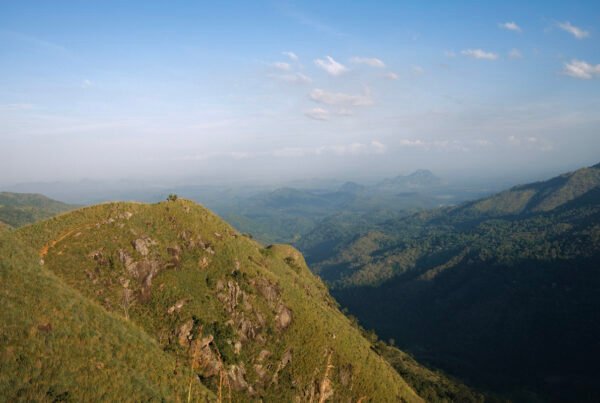
After the jungle of the Cultural Triangle, the mountains of Ella and the wild beaches of Tangalle and Mirissa, we arrived inside the walls of a town shaped by Sri Lanka’s colonial history: Galle.
The modern town of Galle isn’t very interesting, but the old town, known as the Fort, is full of charm and deserves a full day. We loved wandering around this little walled town, which looks like nowhere else we saw during our two-week trip to Sri Lanka.
And if you’re staying in Galle for more than a day, we also have a few beaches to recommend.
So, what is there to do in Galle, Sri Lanka? Where should you stay? We tell you everything in this article!
Best things to do in Galle
1. Explore Galle Fort
A UNESCO World Heritage Site, Galle Fort is a real pleasure to explore. There are hardly any cars, just a few tuk-tuks circling the edges of the fort looking for customers. We immediately fell for this timeless atmosphere.
Here, you do everything on foot, and we didn’t really plan anything. The narrow lanes just make you want to wander and see where they lead. Church Street and Pedlar Street are among the prettiest.
What strikes you right away is how Galle bears the marks of Sri Lanka’s different colonial periods. Here and there, you’ll notice buildings built by the Dutch and the British, as well as buildings with Muslim influences.


Add these to your walking bucket list:
The Galle ramparts
Walking along the ramparts is the best way to discover the town and its architecture from above. You can walk all the way around the Fort, passing lots of old cannons and colonial buildings, including the Clock Tower.
Along the way, you’ll also pass the pretty Galle Lighthouse. The current tower was built by the British in 1939, on the site of Sri Lanka’s oldest light station, first lit in 1848. Next to it, the Flag Rock Bastion offers a great view over the sea.
Don’t miss the Sun Bastion either, for a stunning view of the cricket stadium.
Galle’s iconic buildings
Inside the ramparts, several buildings are worth a look, starting with the lovely Meeran Jumma Mosque, which blends Arab and European influences. There’s also the Buddhist temple Sri Sudharmalaya, with its pretty white stupa.
Don’t miss the Dutch Reformed Church, a typical Dutch church built in 1755, and the Old Dutch Hospital, a former hospital that’s now home to restaurants, cafés and shops.
The Fort’s museums
Finally, there are also a few museums to visit, like the National Museum, the National Maritime Archaeology Museum and the Historical Mansion Museum.


2. Go souvenir shopping
Galle Fort is packed with restaurants, bars and shops. We found a few quality shops to bring home souvenirs for ourselves or our loved ones:
- Luna: for lovely handicrafts (carved elephants, silk pouches made from sari scraps, painted wooden bowls, silver jewelry, etc.)
- StickNoBills: for beautiful posters of Sri Lanka and its landmarks
- Ceylon Tea: for delicately flavored local tea at low prices


3. Watch the sunset from the ramparts
When the sun starts to go down, head to the western ramparts for a stunning sunset over the Indian Ocean.
You probably won’t be alone: the ramparts are lined with large lawns where local families come to fly their most beautiful kites.


Things to do around Galle
1. Relax on one of Galle’s beaches
If you want to cool off during your visit of the Fort, head to Galle Fort Beach. It’s right behind the lighthouse, and its calm water is great for swimming.
A bit farther away is the very popular Jungle Beach, a much wilder beach where it’s nicer to spend a few hours. It’s about a 12-minute drive from Galle.
You’ll find other beaches around Galle, like Unawatuna, a crescent-shaped bay that’s ideal for snorkeling, or Hikkaduwa, perfect for surfers.
2. Go on a safari from Galle
As we explain in our Tangalle travel guide, going on a safari is a must in Sri Lanka. We went to Udawalawe National Park, which is best known for its elephants. We were lucky enough to see one barely 3 minutes after entering the park in our jeep. A sight we’ll never forget!
Udawalawe is about a 2.5 to 3-hour drive from Galle, so plan for an early start. You can ask your hotel to arrange a driver, or book through an agency like this one, which will pick you up at your hotel and arrange a jeep for you to explore the park.


3. Visit the Kosgoda turtle hatchery
About an hour’s drive from Galle, this sanctuary protects sea turtles and sits on one of their favorite nesting beaches. Sri Lanka is a real turtle paradise (five different species of sea turtles nest on its shores), so protecting them is a big deal here.
The Kosgoda Turtle Hatchery works as a refuge for turtles, protecting the eggs and caring for injured animals. You can visit to learn more about their work, or even volunteer to help protect these adorable turtles.
Where to stay in Galle Fort
We stayed at Sirène Galle Fort, very close to the lighthouse and run by a small, really friendly and helpful family. We had a great night’s sleep in a spacious, air-conditioned room and enjoyed a delicious breakfast in the morning.
Other good options include Mango House, also inside the Fort.

Where to eat in Galle Fort
There are plenty of restaurants in Galle Fort, but we loved Coconut Sambol, which serves delicious all-you-can-eat homemade rice and curry! We absolutely loved putting together our own rice and curry from lots of quality dishes. They also make delicious homemade ginger beer.
The restaurant is tiny, so you might not find a free table. As an alternative, we recommend Lucky Fort Restaurant, which serves local, home-style food.
To cool off, we loved the homemade ice cream at Isle of Gelato and Café 82, with original flavors and super friendly staff.


How to get to Galle Fort
From Colombo:
- By bus: allow 2 to 3 hours. You can also take a faster expressway bus (“Highway Bus”) early in the morning.
- By train: allow 3 to 4 hours, depending on the train. The scenery is worth it, as the line runs right along the west coast.
Once you arrive at Galle Central Bus Stand, walk 5 minutes to the Fort’s Main Gate, between the Moon Bastion and the Sun Bastion. Be careful at the gate: a few tuk-tuk drivers will tell you you’re in the wrong place and offer to take you to your hotel. Just keep walking, you’re in the right place!
The history of Galle, a town shaped by colonialism
Before diving into the things to do in Galle, a bit of history! Knowing the town’s background really helps you understand what you’re seeing, as Galle holds a unique place in Sri Lanka.
Located on Sri Lanka’s southwest coast, Galle was a port town and a major stop on the maritime Silk Road and spice route. Arab and Chinese merchants were already trading here centuries before the Europeans arrived. Everything changed when the Portuguese landed in Galle in 1505. They later built the first fortifications here, turning the town into the country’s main port.
The fort was captured by the Dutch in 1640, who greatly expanded it into the Galle Fort we know today. The massive bastions and the grid of straight streets are their work. But Galle gradually lost its strategic importance once the British took over Sri Lanka, as they made Colombo the island’s main port and economic capital.
Today, Galle is a perfect example of a colonial town built by Europeans in South Asia. Dutch, British and Sri Lankan architectural styles stand side by side, revealing a past marked by conflict and division.
Our take on Galle
We loved our time in Galle, especially the Fort. We spent a day and a night there, between our stops in Mirissa and Colombo. It was a bit short, and an extra day wouldn’t have hurt, but it was enough to see the highlights of the Fort.
The atmosphere inside the Fort is truly unique in Sri Lanka. With no traffic, life there feels much more relaxed, and the sunset from the ramparts was a really special moment.
So we recommend including Galle in your Sri Lanka itinerary, without necessarily staying too long!
Some of the links in this article are affiliate links, which means we earn a small commission if you make a reservation through them. This doesn’t change the price for you, but it helps us continue to create content for our blog, which will always remain free. Thank you for your support 🫶