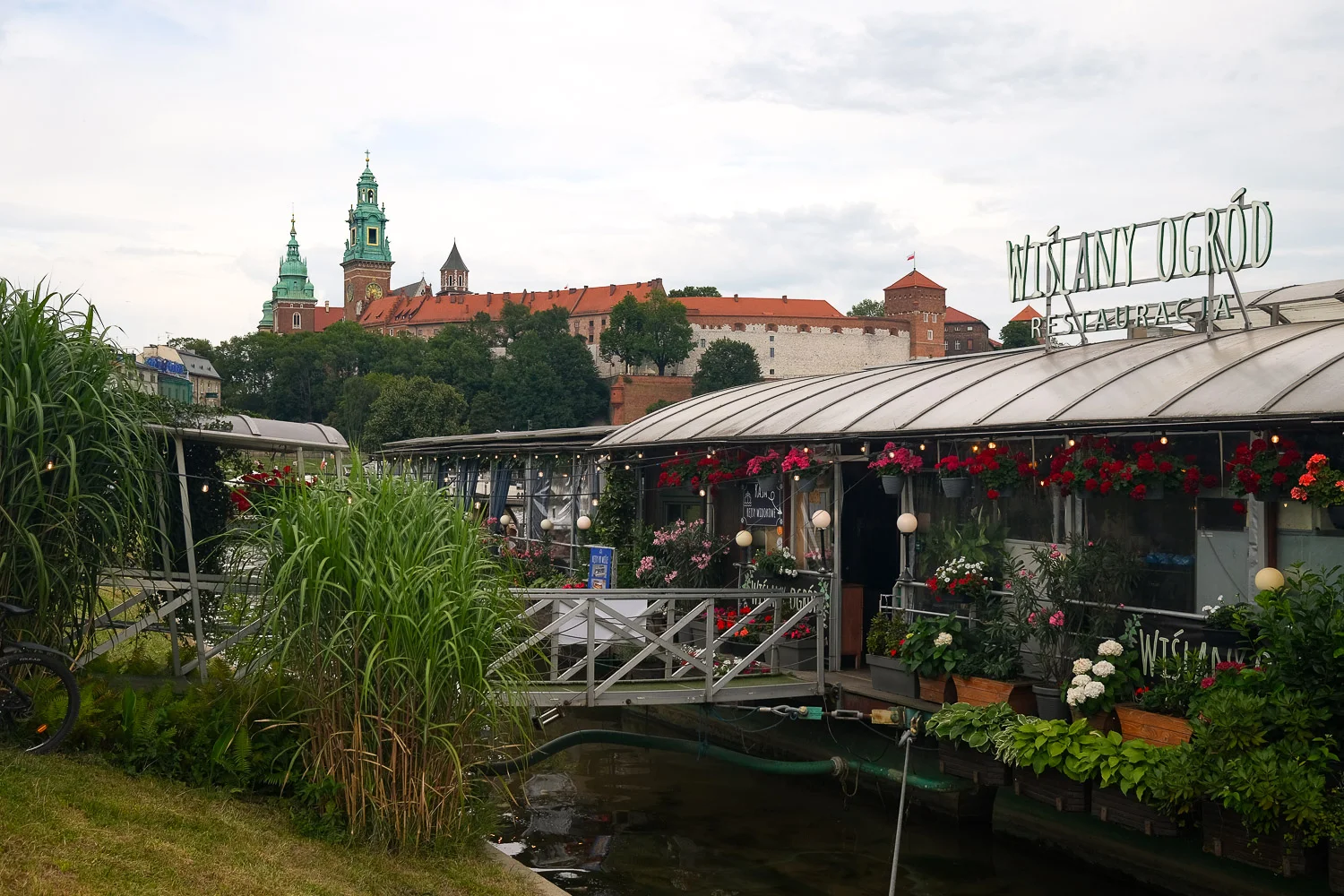
When you think of Krakow, you probably picture its huge Market Square, Wawel Castle or Kazimierz, its Jewish Quarter. But beyond these iconic sights, the city is also full of more unusual curiosities, some of them well hidden, that are well worth the detour.
Between dragon legends, surprising museums, extraordinary structures and cultural surprises, here’s our list of 12 unusual places and experiences off the beaten path to discover if you’re spending 3 days in Krakow!
1. The underground museum beneath the Old Town
When you stand on the Rynek, Krakow’s Main Market Square, it’s hard to imagine what lies beneath your feet. Yet there’s a whole museum of more than 43,000 square feet (4,000 m²) down there: Rynek Underground.
The museum covers medieval Krakow: daily life, trade, crafts and how the city was organized. It’s all illustrated by many artifacts from the 2005 excavations carried out under the square. During those excavations, archaeologists uncovered extensive remains of market stalls, sections of road, aqueducts and even a settlement destroyed by the Tatars.
The visit is really interesting and well explained (with lots of touch screens in English), we loved it! One section looks at burial practices, including how to bury someone suspected of being a vampire so they don’t come back to life!


2. The Pinball Museum
Hidden in a medieval cellar, the Krakow Pinball Museum is a museum in name only. It’s actually home to about fifty pinball machines and dozens of arcade games. Nostalgia lovers, pop culture fans and anyone who simply loves games will have a blast.
You pay for an hour or a full day, during which you can play all the machines as much as you like. And let us tell you, our hour there flew by! We had a great time discovering old Indiana Jones, Star Wars and Addams Family pinball machines.


3. The dragon bones at Wawel Cathedral
A curiosity you’re bound to walk past during your stay in Krakow, but one that’s easy to miss. Hanging next to the door of Wawel Cathedral, you’ll see bones that supposedly belonged to a dragon.
Smok Wawelski, the Wawel Dragon, once lived in a cave under Wawel Hill, which it only left to devour young women if the townspeople didn’t bring it offerings. After it was defeated by a shoemaker’s apprentice, who wanted to marry King Krakus’s daughter, its bones were said to have been hung on the cathedral.
In reality, they’re more likely fossilized whale or mammoth bones, which have hung here for centuries.


4. The Dragon’s Den
Sticking with the Wawel Dragon, the city’s real emblem: under the castle lies the cave where the dragon supposedly lived. It was used as a tavern in the Middle Ages, and today it’s a popular attraction for kids and adults alike.
At the exit of the cave, you’ll be greeted by a bronze sculpture of the dragon, made by Bronisław Chromy, that breathes fire!


5. Krakow’s Walk of Fame
Krakow has its own Hollywood Walk of Fame! You’ll find it below Wawel Hill, along the Vistula River. The Krakow Walk of Fame, or Aleja Gwiazd, is admittedly a lot smaller than its American counterpart, but it still features some big names, like Michael Jackson and Elvis Presley. Of course, you’ll also find more local names, like the film director Andrzej Wajda.
The avenue is the result of a collaboration between the city, the radio station RMF FM and the Off Plus Camera film festival. It opened in 2008, and its first star was unveiled by Céline Dion.
6. Kościuszko Mound
Kościuszko Mound is a huge man-made hill built on the outskirts of Krakow in 1823. It’s dedicated to Tadeusz Kościuszko, famous for leading the 1794 national uprising against Russian and Prussian rule. Thanks to its height, the mound has served as a strategic military position since it was built, which explains the brick fort around its base.
Follow the path winding around the mound and you’ll get a nice view of Krakow from the top (although the city is a bit far away). There’s also a museum about Tadeusz Kościuszko’s life and struggle.
It’s not the only mound in the area: there are four of them around Krakow, but this one is the most recent.


7. The synagogue turned bookstore
Right in the heart of Kazimierz, the Jewish Quarter, you’ll find an unusual bookstore tucked away just off Szeroka Street. It was originally the Popper Synagogue, built in 1620 with funding from the merchant Wolf Popper (nicknamed “the Stork” because he stood on one leg when he was thinking).
The synagogue went through many changes: it was looted and damaged by the Nazis before being restored by the Jewish community. It has since been turned into a bookstore and art workshop. Sheltered in its back courtyard, this former synagogue now has a lovely, peaceful atmosphere.


8. Wieliczka Salt Mine
A UNESCO World Heritage Site, Wieliczka Salt Mine is a real curiosity. With more than 186 miles (300 km) of tunnels dug by hand since the 12th century, it’s a vast maze that you can only explore on a guided tour.
Going down to 443 feet (135 m) below ground, you dive into the history of the mine and how it was worked through the ages. You’d think you were in the Mines of Moria! You discover lakes, shafts, statues carved out of salt and, above all, the spectacular Chapel of St. Kinga. This huge hall, decorated with bas-reliefs and lit by salt crystal chandeliers, makes you completely forget how deep underground you are.
And of course, you can’t leave without your own little bag of salt!
⛏️ Book your salt mine tour ➜


9. Father Bernatek Footbridge
If you’re heading to Podgórze to visit Schindler’s Factory, don’t miss this quirky footbridge across the Vistula. Opened in 2010 for pedestrians and cyclists only, it stands out for its metal arch hung with sculptures of tightrope walkers that seem to float in midair.
The footbridge has a really romantic feel, with views of both banks of the Vistula and of these lovely metal acrobats.


10. The Eagle Pharmacy
This small pharmacy in Podgórze hides a heavy secret. During World War II, it was run by Tadeusz Pankiewicz, the only non-Jew allowed to work and live inside the Jewish ghetto. His pharmacy didn’t just supply medicine: it was also a place of refuge, meeting and support for the ghetto’s residents. Thanks to the courage of Pankiewicz and his staff, many lives were saved, and the pharmacist was recognized as Righteous Among the Nations.
Now a museum, the pharmacy displays a collection of objects, documents and testimonies about daily life in the ghetto and the resistance organized there. It’s a dense but very interesting visit to better understand this tragic period in the city’s history.


11. Listen to the trumpet call every hour
If you listen carefully on the hour while you’re on the Main Market Square, you’ll hear the bells of St. Mary’s Basilica, but also a short tune played on the trumpet.
It’s the hejnał, a traditional Polish melody played toward the four points of the compass every hour. According to legend, it dates back to the Mongol invasion of 1241, when a Krakow guard blew his trumpet to raise the alarm. But his tune was cut short when an arrow pierced his throat, which is why the melody played every hour ends so abruptly.
If you climb to the top of St. Mary’s Basilica bell tower, you’ll see the post from which the seven trumpeters take turns sounding the hour for the people of Krakow, as well as their portraits, including the Kołton family, who played the hejnał for three generations.


12. Eat a zapiekanka
Craving a hearty snack between two visits? Try a zapiekanka, the iconic dish of Polish street food.
A zapiekanka (from the Polish verb for “to bake with a topping”) is half a baguette baked with all kinds of toppings and sauces, like onions, mushrooms, cheese or, for the most daring, cranberries.
Popular since the 1970s, you’ll find them all over Krakow. But the go-to place to try one is in Kazimierz, on Plac Nowy. There, you’ll find a large round market hall with no shortage of zapiekanka stands!

Where to stay in Krakow?
The easiest option is to stay in a central neighborhood, as close as possible to the Old Town. We chose Kazimierz, a short walk from the center and full of great places to go in the evening. We stayed at Apartment Jozefa, a spacious, quiet and very well-equipped apartment!
How to plan 3 days in Krakow?
You’ll find our 3-day Krakow itinerary in this article, designed to keep travel time to a minimum and see as many sites as possible. It covers Wawel Hill and the Old Town on day one, Podgórze and Kazimierz on day two, then Auschwitz and the salt mine on day three.
What about you? What unusual places have you discovered in Krakow? Come share them with us on Instagram!
Some of the links in this article are affiliate links, which means we earn a small commission if you make a reservation through them. This doesn’t change the price for you, but it helps us continue to create content for our blog, which will always remain free. Thank you for your support 🫶