Sigiriya, in the heart of the Cultural Triangle, was one of our favorite stops during our trip to Sri Lanka, and it’s a must on any itinerary around the country. Famous for Lion Rock, the town is also home to other natural wonders, like Pidurangala Rock and Kayanwala Weva lake. Sigiriya is also the perfect base for exploring the whole Cultural Triangle, as it’s ideally located close to the region’s other highlights.
So, what is there to do and see in Sigiriya? Which places should you visit in the Cultural Triangle? Where should you stay? How do you get around? We answer all of that in this article!
What is the Cultural Triangle in Sri Lanka?
The Cultural Triangle is the heart of Sri Lanka: a triangle in the north-central part of the country connecting the cities of Anuradhapura, Polonnaruwa and Kandy, with Sigiriya in the middle. This is the region where you can trace back much of the country’s history and its ancient civilizations.
It’s packed with temples, ruins and stupas that take you back as far as the 4th century BC, all surrounded by nature, with national parks and elephants along the way.
Things to do in Sigiriya
1. Climb Lion Rock
Sigiriya, which literally translates as “Lion Rock“, is probably the most famous cultural site in Sri Lanka. This palace-fortress perched on a huge rock more than 650 feet (200 meters) high is now a UNESCO World Heritage Site, and it even inspired Spielberg for “Indiana Jones and the Temple of Doom”.
The palace was built in the 5th century by King Kashyapa I, who took the throne after killing his father and sending his brother into exile. After 7 years of construction, King Kashyapa lived there for about ten years, until his banished brother came back for revenge and drove him out of his hilltop fortress.
Entry costs $35 per adult. We recommend going early in the morning to avoid the heat (the climb is in full sun) and the crowds, which can slow you down on the 1,202 steps to the top. Bring plenty of water too! Lots of guides are also available on site to show you around, for a fee.


As soon as you arrive, you’ll be struck by the view of the rock towering over the landscaped gardens that stretch out at its feet.
On your way up, don’t miss the two giant lion paws carved on the first platform. A huge lion’s head more than 30 feet (10 meters) tall once stood here, and its mouth was the entrance to the fortress.
The climb can feel long, especially when you have to wait in line on the stairs, but the view from the top is well worth it. From up there, you can see all the jungle and gardens around Sigiriya. Take your time to wander through the ruins of King Kashyapa’s fortress, walk around the large pool and enjoy the different viewpoints.
On the way back down, take the walkway to the Sigiriya Maidens frescoes to admire these 5th-century paintings, which are still remarkably colorful and well preserved! Discovered in 1875, the murals show 21 women, King Kashyapa’s courtesans (although legend has it that the king actually had more than a thousand). They’re hugely important in Sri Lanka, as they are the only images of women from medieval Ceylon.
Once you’re back on solid ground, take some time to explore the ruins around the rock. You can follow the amazing irrigation system, which could carry water all the way to the top of the rock, more than 1,150 feet (350 meters) above the level of the reservoir.
Practical information:
💶 Price: $35 per person (2026 price)
🕘 Opening hours: Every day, 5 a.m. to 6:30 p.m. Go in the morning to avoid the crowds and the heat.
⏳ Visit duration: 2 to 3 hours
2. Watch the sunset from Pidurangala Rock
If the price or the crowds at Lion Rock put you off, you can head to its close neighbor, Pidurangala. (We did both, and they’re both worth it!)
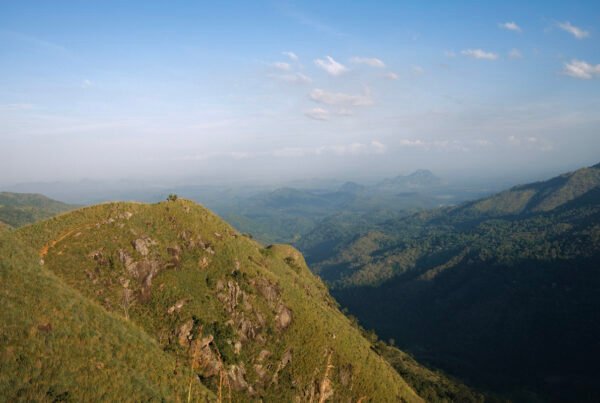
The climb starts at the foot of the rock, on a trail behind a temple. It’s easier (about 30 minutes) and cheaper (about $3.50 per person). The view from the top is even better than from Lion Rock, because it gives you a stunning panorama of Sigiriya.
If you start climbing at 5 p.m., you’re guaranteed a beautiful sunset with a panoramic view. Watch out for the cheeky little monkeys at the top!


3. Relax by Kayanwala Weva lake
Finally, for a lovely view of Sigiriya and the Kandy mountains, head to Kayanwala Weva lake, far away from the tourist crowds.
A few locals come here to swim, fish or do their laundry, and the lake offers plenty of viewpoints over the Sigiriya area. It’s the perfect place to unwind after climbing the rock!


Where to stay in Sigiriya?
So you don’t have to change hotels every morning, we recommend staying in Sigiriya for your whole visit to the Cultural Triangle.
It’s the town with the most things to do, a pleasant atmosphere and lots of restaurants for the evening. It’s also ideally located, close to the other towns of the Cultural Triangle.
We stayed at Sigiri Forest View, a charming guesthouse run by Nandana and his family. Surrounded by nature, it’s just a short walk from Pidurangala Rock, and our hosts helped us a lot with planning our stay (tips, a taxi from Colombo, scooter rental). They also serve a great, hearty breakfast and a delicious rice & curry for dinner!
If you’d like something a bit more comfortable with a pool (it gets very hot in Sigiriya), we recommend Lankapura Heritage or Hotel Sigiriya. Both hotels have stunning views of Sigiriya and are close to the Lion Rock entrance.
🛌 Book your stay in Sigiriya ➜
If you’d rather be closer to the bus station, you can stay in Dambulla, but the town is much less pleasant and noisier.
You’ll find more accommodation ideas below if you’d like to stay in the other towns of the Cultural Triangle.
Where to eat in Sigiriya?
Sigiriya is also a great place to try traditional Sri Lankan food. Since our hotel was in town, we tried several restaurants, and we recommend all of them:
- Chooti Restaurant: for a great kottu roti and fresh juices.
- Ahinsa Restaurant: for a tasty and generous chicken biryani.
- Little Hut Sigiriya: for an original and varied vegetarian rice & curry.
Things to do around Sigiriya
1. Visit the Dambulla Cave Temple
This cave temple, also known as the Golden Temple, is one of the most important Buddhist sites in Sri Lanka and became a UNESCO World Heritage Site in 1991. Inside its 5 caves, no fewer than 150 Buddha statues await you.


Expect seated, reclining and standing Buddhas, in every possible pose and size. The caves are painted from floor to ceiling, so it feels like being under huge sheets of fabric. The temple sits on top of a hill with a beautiful view over the Cultural Triangle.
Bring a guidebook or hire a guide to better understand what you’re seeing (our guidebook really helped us out!).


Entry costs $10 per person. A respectful dress code applies, with shoulders and knees covered; you can rent sarongs on site for a few cents (don’t fall for the pants sellers on the way who’ll tell you otherwise). You visit the temple barefoot, and you can leave your shoes at the entrance in exchange for a small donation.
Where to stay in Dambulla
Here are a few hotels recommended by other travelers:
- Golden Rainbow Guest House: a charming little guesthouse very close to the Dambulla caves.
- White Land City Hotel: a nice hotel with a pool, close to the town’s bus station.
2. Polonnaruwa ancient city
Polonnaruwa was Sri Lanka’s second capital, and in the 12th century it was one of the largest urban centers in South Asia. Today, what remains is a vast ancient city in ruins, with lots of sights to discover.
Entry to the ancient city costs $35 per person (2026 price). It’s fairly expensive, but worth it, as exploring the site will take you at least 4 hours. Tickets are sold at the archaeological museum, which we recommend visiting first to get the full historical background and see the scale models of the monuments you’re about to explore.
We recommend coming early in the morning or after 3 p.m. to avoid the worst of the heat, and bringing plenty of water. We went at noon and we were absolutely drenched in sweat!
To get around the ancient city, you’ll want some kind of transportation, as the sights are fairly far apart. You can easily rent bikes in the modern town, hire a tuk-tuk inside the site, or bring your own wheels (we visited on the scooter we had rented in Sigiriya).


What to see in Polonnaruwa
Here are the sights we recommend:
- Dalada Maluwa (the Sacred Quadrangle): a large terrace near the entrance with a dozen monuments, including the Vatadage, a two-level circular platform that once held relics, and the Atadage, the first temple to house the Tooth Relic of the Buddha (now in Kandy).
- Lankatilaka: a temple with a huge Buddha statue 60 feet (18 meters) tall.
- Gal Vihara: a giant rock face with four different Buddhas carved into it (a kind of local Mount Rushmore?), including a reclining Buddha 50 feet (15 meters) long.
- Kiri Vihara and Rankoth Vehera: two very large stupas, one white and the other brick, more than 200 feet (60 meters) high and surrounded by small stone altars.
- Thivanka Image House: the inside of this temple is covered in well-preserved frescoes showing different scenes from the life of the Buddha.
You can also round off your visit with the Lotus Pond, a pool shaped like a lotus flower, or King Parakramabahu’s Council Chamber.


3. The ruins of Anuradhapura
In the north of the Cultural Triangle lies Anuradhapura, Sri Lanka’s first capital, founded in the 4th century BC, long before Polonnaruwa took over as the capital of the country.
The entrance ticket costs $25, and as in Polonnaruwa, it’s best to come early in the morning and rent bikes or some other kind of transportation to explore the site.
What to see in Anuradhapura
Here are the main sights to see on your trip to Anuradhapura:
- Sri Maha Bodhi: a sacred tree revered as a sapling of the tree under which the Buddha attained enlightenment. More than 2,000 years old, it’s said to be one of the oldest trees in the world.
- Ruwanwelisaya: a huge stupa 300 feet (90 meters) high, surrounded by a wall decorated with hundreds of elephant heads.
- Thuparamaya: the first stupa built in Sri Lanka, said to enshrine the Buddha’s collarbone.
- Jetavanaramaya: about 400 feet (120 meters) high when it was built in the 3rd century, this stupa was one of the tallest structures in the world at the time.
- Isurumuniya Temple: a small rock temple known for its stone carvings and its peaceful pond.
- Kuttam Pokuna: these twin ponds were once used as bathing pools by the monks.
- Samadhi Buddha: an iconic statue of the Buddha in seated meditation.
Where to stay in Anuradhapura
Here are a few suggestions for where to stay in Anuradhapura:
- Lievi’s Tourist: this small, locally run hotel is ideally located, with good food and bikes for rent.
- Ceylonima Home Stay : a homestay run by a family working in tourism, who can help you plan your stay in the area.
4. Other places to visit in the Cultural Triangle
These are the best-known and most visited places in the Cultural Triangle. But if you’d like to explore the region further, you can also stop at the following places.
- Mihintale: the birthplace of Buddhism in Sri Lanka, Mihintale is a major Buddhist pilgrimage site, especially during the June full moon (Poson).
- Ritigala: an archaeological site in the middle of a nature reserve at the foot of a mountain range.
- Habarana: a town close to Minneriya and Kaudulla national parks, both famous for their many elephants. If you’re near Minneriya National Park between August and September, you might witness “The Gathering”: hundreds of elephants coming together in the park! To book your safari, hotels can usually help, or you can book a tour online.
Short on time? Our top picks
If you only have a short time in the Cultural Triangle, our must-sees are Pidurangala and Polonnaruwa. That way, you get both culture and spectacular views.
Pidurangala Rock really blew us away with its view of the jungle and Lion Rock. On top of that, it’s much cheaper than Lion Rock.
On the cultural side, Polonnaruwa won us over. Wandering around its many historic sites was a great way to soak up Sri Lankan culture and history.
How to get around the Cultural Triangle
Getting there from Colombo
Trains run from Colombo to Anuradhapura and Polonnaruwa. Otherwise, you can take a bus to Dambulla (about a 6-hour ride).
We chose the easiest option: a taxi from the airport to Sigiriya, booked through our hotel. The ride took 4 hours and cost about $60.
If you’re short on time, tour operators offer day trips from Colombo to visit Sigiriya and Dambulla.
Getting there from Kandy
A bus runs from Kandy to Dambulla. The ride takes 2.5 hours and costs about $1.70 per person.
Just like from Colombo, you can also take a day trip to visit Sigiriya and Dambulla.
Getting around the Cultural Triangle
You have several options:
By bus: from Dambulla bus station, you can reach every site in the Cultural Triangle. Rides are really cheap but can be long. For example, we took the bus from Sigiriya to Dambulla for about $1.70 per person, for a 50-minute ride. You can also book your bus in advance on 12Go Asia.
By tuk-tuk: as you walk around, you’ll find plenty of tuk-tuk drivers happy to take you around the region. You can also use PickMe, the local Uber, to find an available tuk-tuk.
By scooter: this is what we chose, and it’s the easiest option if you want to be really flexible, while enjoying the roads through the nature reserves. Rental costs about $8 a day and gas is around $1.05 a liter, so it’s also a very cheap way to get around. You can also rent tuk-tuks.


Our 3-day Sigiriya and Cultural Triangle itinerary
Need some inspiration? Here’s the itinerary we followed during our three days in the Cultural Triangle.
- Day 1: Arrival from Colombo airport and sunset climb up Pidurangala Rock
- Day 2: Lion Rock, Dambulla’s Golden Cave Temple and some downtime at Kayanwala Weva lake
- Day 3: A full day in Polonnaruwa ancient city
- Day 4: Early morning bus to Kandy
The Cultural Triangle was one of our favorite stops and a wonderful start to our Sri Lanka trip. We recommend spending at least three days here so you have time to see several historic sites.
Some of the links in this article are affiliate links, which means we earn a small commission if you make a reservation through them. This doesn’t change the price for you, but it helps us continue to create content for our blog, which will always remain free. Thank you for your support 🫶